
On this page
You can be right about the market direction and still receive fewer tokens than expected. That difference is called slippage.
In crypto—and especially in DeFi—the price you see when you initiate a swap is not always the price you ultimately receive.
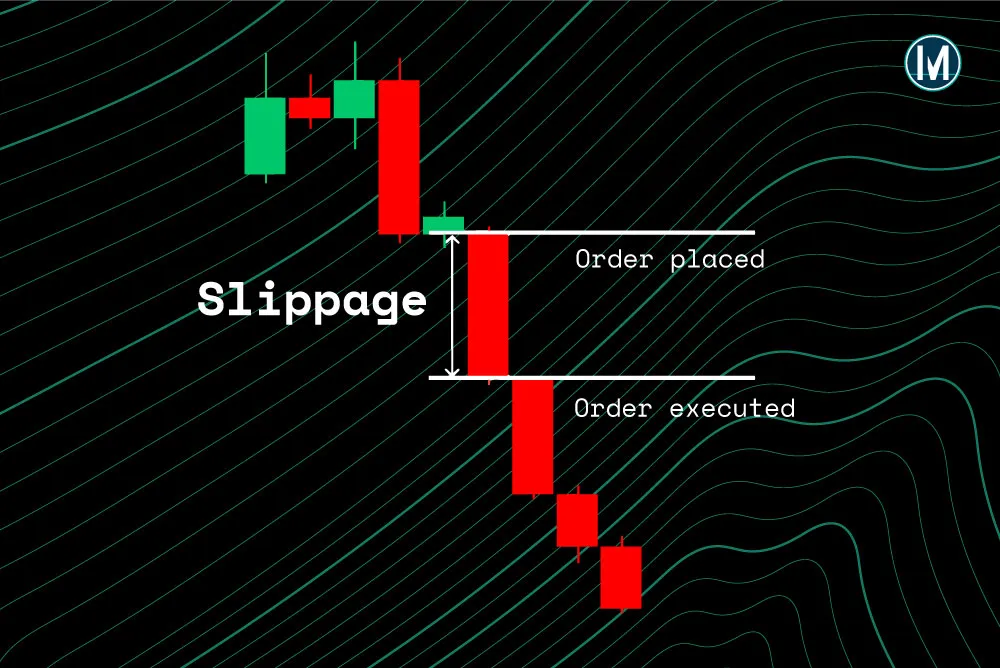
Slippage is the difference between the expected price of a trade and the price at which it is actually executed. It can be negative, when you receive a worse price than expected, or positive, when execution works in your favor.
What is slippage in crypto?
Imagine you want to swap 1 ETH for DOC and the DEX interface estimates that you will receive 3,000 DOC.
Between the moment you approve the quote and the moment the transaction is confirmed on-chain, market conditions change. Your transaction is eventually executed at a rate that gives you only 2,985 DOC.
That difference between the expected and actual outcome is slippage.
On a centralized exchange, slippage often occurs when a market order moves through several levels of the order book or when prices change rapidly.
On a decentralized exchange using liquidity pools, other factors also matter, including pool depth, trade size, volatility, and the time required for the transaction to be confirmed.
Slippage is therefore not a fee. It is an execution risk.
Positive vs. Negative slippage
Negative slippage occurs when you buy at a higher price or sell at a lower price than expected.
Positive slippage occurs when the final execution price is better than the original quote.
A simple way to calculate it is:
Slippage (%) = [(executed price - expected price) / expected price] × 100
The interpretation of the result depends on whether you are buying or selling.
For token swaps, you can also measure slippage by comparing the amount of tokens you expected to receive with the amount that actually arrived in your wallet.
Why does slippage happen in DeFi?
1. Low Liquidity
The less liquidity available for a trading pair, the harder it is to execute a large trade close to the quoted price.
This is particularly common with new tokens, low-volume markets, or small liquidity pools.
2. High Volatility
If the market moves while your transaction is waiting for confirmation, the original quote may no longer be valid.
With highly volatile assets, even a few seconds can make a meaningful difference.
3. Large Trade Size
The larger your swap is relative to the liquidity available in the pool, the more likely it is to affect the execution price.
This is where another important concept appears: price impact.
Slippage vs. Price impact: What Is the difference?
Slippage and price impact are closely related, but they are not the same thing.
Price impact is the price movement caused directly by your own trade as it consumes liquidity from a pool.
If your order is large enough to move the pool price by 2%, that movement is price impact.
Slippage, on the other hand, is the difference between the result you expected and the result you actually receive during execution.
For example, your trade might create a 2% price impact because of its size. If the market also moves while the transaction is being confirmed and you receive even fewer tokens, that additional difference contributes to slippage.
Understanding the distinction matters because increasing your slippage tolerance does not solve the underlying problem of trading against a shallow liquidity pool.
What Is slippage tolerance?
Slippage tolerance is the maximum amount of price deviation you are willing to accept before a swap should fail rather than execute under worse conditions.
For example, imagine a DEX estimates that you will receive 1,000 tokens and you set your slippage tolerance to 1%.
You are effectively telling the protocol that you are willing to accept some price movement within that predefined range.
In DeFi, there is always a trade-off:
- Tolerance set too low: the transaction may fail if the price moves outside your limit.
- Tolerance set too high: you may accept a significantly worse execution price and increase your exposure to certain forms of MEV.
There is no universally correct slippage tolerance.
The appropriate level depends on liquidity, volatility, trade size, the token’s mechanics, network conditions, and the protocol you are using.
Can high slippage tolerance be dangerous?
Yes.
A high slippage tolerance gives a transaction more room to execute even if the price moves against you.
This can be particularly relevant in environments affected by MEV, or Maximal Extractable Value.
One example is a sandwich attack.
In a sandwich attack, an automated actor identifies a pending transaction and executes another transaction before it to move the price. The victim’s swap then executes at a worse rate, after which the attacker places another transaction to capture the resulting profit.
A very wide slippage tolerance can make it easier for a swap to remain valid despite unfavorable price movement.
That does not mean high slippage automatically causes a sandwich attack, but unnecessarily increasing the tolerance can expose you to worse execution conditions.
If a token requires an unusually high slippage setting, investigate why before approving the transaction.
Some tokens use transfer taxes, transaction fees, or other tokenomics that affect the amount ultimately received.
How to reduce slippage in a crypto swap
Use Markets With Deeper Liquidity
Look for pools and trading routes with greater liquidity.
Deeper liquidity generally allows larger trades to be executed with less price disruption.
DEX aggregators can also compare multiple liquidity sources and identify more efficient routes.
Reduce Your Trade Size
If your swap represents a large percentage of the available liquidity, consider reducing the size of the transaction.
Splitting a trade into several smaller swaps may sometimes improve execution, although it can also increase gas costs and does not guarantee a better result.
Check Price Impact Before Confirming
Do not focus only on the slippage tolerance setting.
If the interface shows high price impact, the underlying problem may be insufficient liquidity or an oversized trade.
Increasing your slippage tolerance will not remove that price impact.
Do Not Increase Slippage Tolerance Automatically
When a transaction fails, it can be tempting to keep raising the slippage setting until the swap goes through.
That can be risky.
A higher tolerance may reduce the probability of a failed transaction, but it also increases the range of prices you are willing to accept.
Treat slippage tolerance as a risk parameter, not as a button for forcing a transaction through.
Consider Limit Orders When Available
Limit orders prioritize price over immediate execution.
Instead of accepting the current market price, you define the price at which you are willing to buy or sell.
This can help prevent execution at an unfavorable price, although the order may never be filled if the market does not reach your target.
Some DeFi protocols and DEX interfaces now support limit-order functionality alongside regular swaps.
Can slippage be completely avoided?
Not always.
Crypto markets change continuously, and DeFi transactions depend on liquidity, block confirmation, market volatility, network activity, and smart contract execution.
The goal is not necessarily to eliminate slippage completely. It is to prevent poor execution from turning a reasonable swap into a much more expensive trade.
Before confirming a transaction, review at least four factors:
minimum amount received, price impact, available liquidity, and slippage tolerance.
In DeFi, those few seconds of verification can matter just as much as choosing which token to buy.
Crypto assets and DeFi protocols involve significant risks, including loss of capital, market volatility, smart contract vulnerabilities, and adverse transaction execution. Always verify transaction details before signing and never risk funds you cannot afford to lose.