
On this page
Understanding what a Bitcoin address is and how it works is one of the most important points for moving BTC safely. An address is the “destination” to which bitcoins are sent on the network, and it’s used both to receive funds and to identify where those funds should go.
In practice, wallets generate different types of addresses as a result of technical evolution over time. Knowing these “evolutions” gives you more control and helps you manage Bitcoin or satoshis better, especially when variables like fees, wallet compatibility, and exchange support come into play. In 2026 this is even more relevant, because not all services handle the most modern formats in the same way.
What is a Bitcoin address?
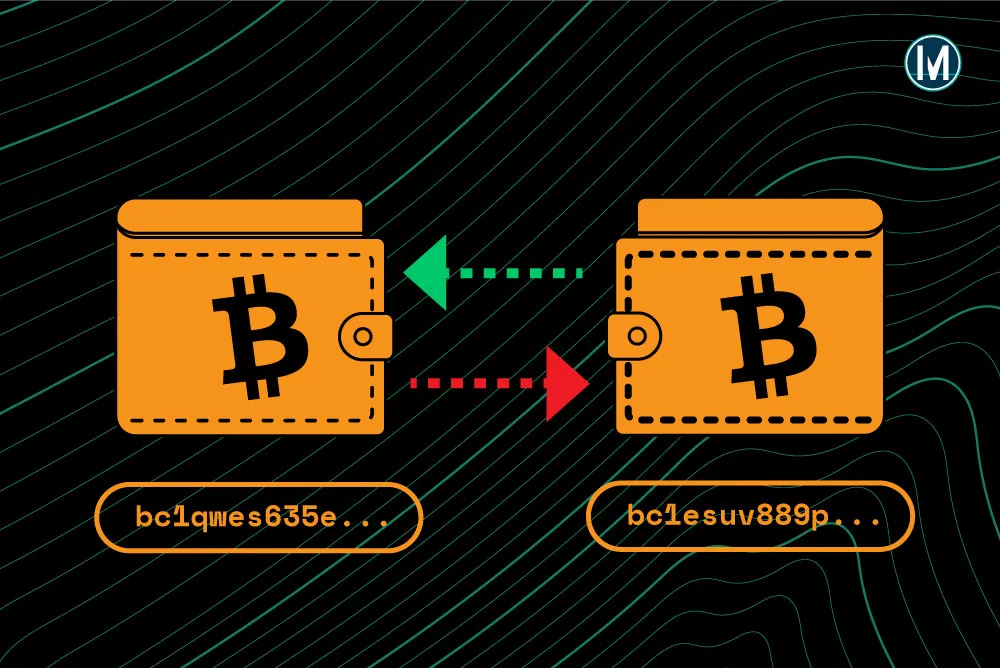
A Bitcoin address is an alphanumeric string (sometimes also shown as a QR code) that is used to receive BTC on the network. It can be shared publicly to receive payments, similar to how you use a bank account number or an email address to receive messages.
It’s important to distinguish a few concepts:
Bitcoin address: public destination for receiving BTC.
Wallet: app or device that manages keys and creates addresses.
Private key: what allows you to spend the funds. It must never be shared.
Public key: derived from the private key and used in the generation of addresses.
How does a Bitcoin address work under the hood?
Even though it looks like just a random string of characters, a Bitcoin address comes from a cryptographic process:
- The wallet generates a (secret) private key.
- A public key is derived from it.
- That public key is then used to build an address using hash functions and a checksum to detect errors when copying.
Thanks to this design:
- Sharing an address lets you receive funds.
- It does not let anyone spend those funds (that requires the private key).
Types of Bitcoin addresses: the evolution generated by wallets
Over time, wallets have added new address formats. This list of “evolutions” generated by wallets is not a minor detail: it directly affects how you use BTC day to day and often impacts fees and compatibility.
Below are the most common types and how to recognize them.
- Legacy addresses (P2PKH): start with “1”
Format: 1…
These are the oldest addresses and are usually compatible with virtually every service. However, in many situations they are less efficient than modern options, which can translate into higher fees when the network is congested.
When to use them in 2026:
- Only when a service doesn’t support more modern formats.
- P2SH addresses: start with “3”
Format: 3…
This format is often associated with scripts (for example, multisig) and was also widely used as a compatibility bridge to SegWit (in some cases it’s referred to as “nested SegWit”).
Practical advantage:
- Good compatibility with services that still don’t fully accept bc1 addresses.
When to use them:
- If an exchange or wallet has limitations with bech32 (bc1) addresses.
- Native SegWit addresses (Bech32): start with “bc1q”
Format: bc1q…
This is one of the most recommended formats for general use today. SegWit reduces the effective “weight” of certain parts of the transaction and in many cases helps you pay more efficient fees than Legacy.
Main advantages:
- Typically offers more optimized fees compared to older formats.
- Widely supported by modern wallets.
When to use them in 2026:
- As the default standard for most users.
- Taproot addresses (P2TR / Bech32m): start with “bc1p”
Format: bc1p…
Taproot is the most recent and advanced evolution in general use. It introduces improvements in efficiency and privacy for certain types of spends and scripts, although support can vary depending on the service.
Main advantages:
- Technical improvements for more complex transactions.
- Newer, more modern standard.
When to use them in 2026:
- When both your wallet and the recipient (exchange/service) have confirmed compatibility.
Which Bitcoin address is most recommended to use in 2026?
In 2026, the practical recommendation is to understand the different types of addresses and when it makes sense to use each one, since they affect fees, wallet compatibility, and ease of use.
Simple rule of thumb:
- Recommended for general use: bc1q (native SegWit / Bech32)
- If there is confirmed support and you want the most modern option: bc1p (Taproot / Bech32m)
- If you run into compatibility issues with bc1: 3… (P2SH)
- Last resort: 1… (Legacy), only for compatibility
How to receive Bitcoin with an address (without mistakes)
Typical process:
- Open your wallet and go to Receive.
- Copy the address or scan the QR code.
- Share it with the person who will send BTC and never try to copy character by character, because you could make a mistake that costs you satoshis.
Good verification practices:
- Check the first 4 characters (1 / 3 / bc1q / bc1p).
- Check the last 4–6 characters.
- Prefer QR codes to avoid manual errors.
How to send Bitcoin to an address (step by step)
- Go to Send in your wallet.
- Paste or scan the address.
- Choose the amount.
- Adjust the fee if your wallet allows it.
- Confirm.
Key detail in 2026:
Sometimes exchanges or services may reject certain formats due to incomplete support. In those cases, you need to check which format the recipient accepts before moving funds, especially if you’re dealing with significant amounts.
Addresses, UTXOs and “change address”: why you see two outputs
A common point of confusion is seeing a transaction with more than one destination. In Bitcoin, many transactions create:
- one output to the recipient, and
- another change output that goes back to a new address controlled by the sender’s wallet.
This is normal and part of the UTXO model. It doesn’t mean money was “lost”: it’s usually just the change returning to your own wallet.
Privacy: why you shouldn’t always reuse the same address
Addresses can be shared without risking your ability to spend funds, but reusing the same address over and over reduces privacy. If an address becomes publicly linked to an identity, it becomes easier to analyze related movements.
That’s why many wallets automatically generate new addresses: they help maintain better operational privacy.
Fees: how address types affect them
Bitcoin fees depend mainly on the size/weight of the transaction, not the amount sent. Even so, the address type tends to affect efficiency:
- Legacy (1…): generally less efficient.
- Native SegWit (bc1q…): usually more efficient and competitive on fees.
- Taproot (bc1p…): can offer additional improvements in certain cases.
So understanding the formats and how they have evolved helps you optimize how you handle BTC and satoshis, especially when the network is congested.
Frequently asked questions
Does a Bitcoin address expire?
It usually doesn’t expire. It can be reused, although for privacy it’s generally better to use new addresses.
Can you send from a “1…” address to “bc1q” or “bc1p”?
Yes, the network allows it. If there’s a problem, it’s usually due to limitations of the service or exchange, not the network itself.
Are a Bitcoin address and a wallet the same thing?
No. The wallet manages keys and can generate multiple addresses. An address is just the public destination.
Why does the address change every time I tap “Receive”?
Because many wallets automatically create new addresses to improve privacy and organization.